Mahjong Solitaire - Master
Kiwi FunBoard
4.62.13K Reviews
- Version
- 3.3.4
- Installs
- 1.00M
- Age Rating
- Everyone
Screenshots
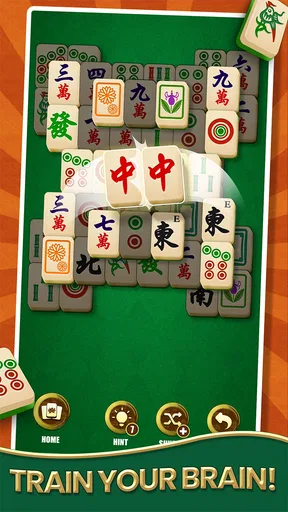
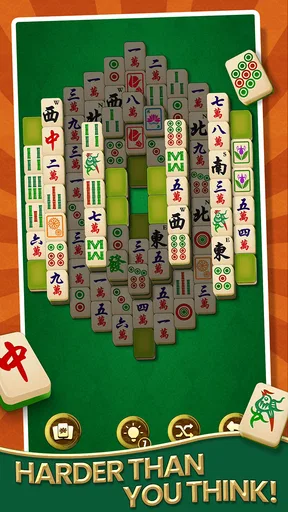
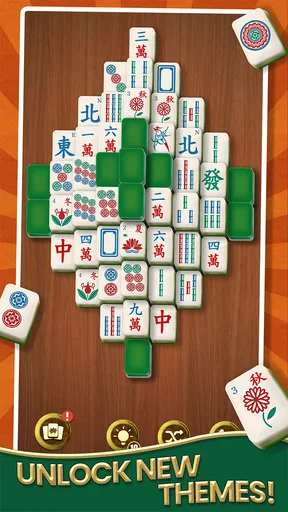
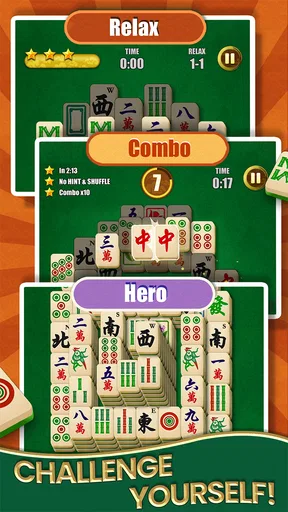
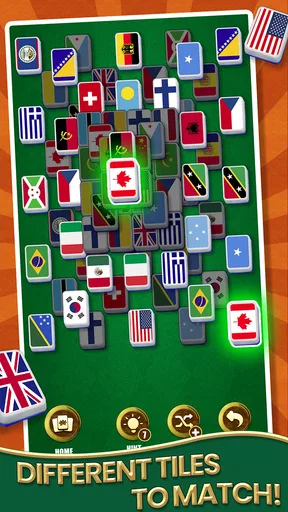
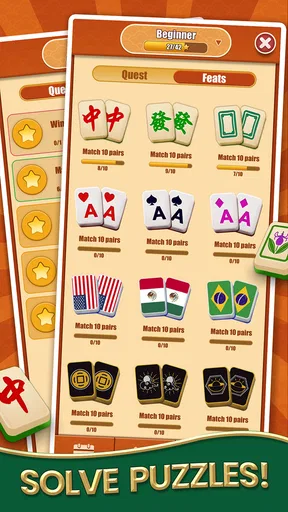
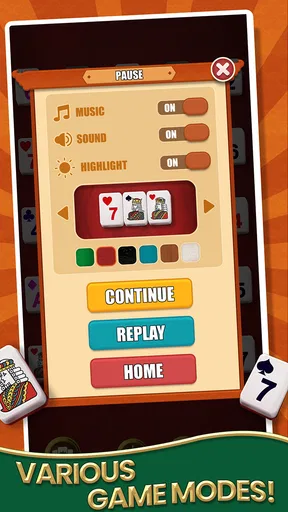
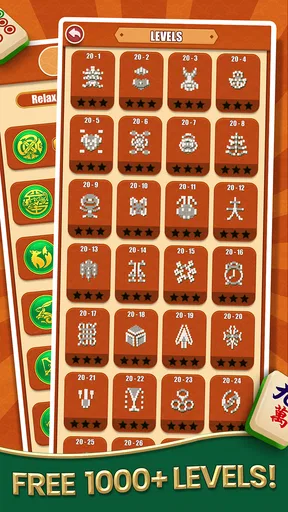
Our Review of Mahjong Solitaire - Master
 Analysis by Appyee
I picked up Mahjong Solitaire - Master expecting a familiar tile-matching pastime, and that is exactly where its appeal begins. It is a board puzzle game from Kiwi Fun, built around the classic Mahjong Solitaire idea rather than a competitive table or a multiplayer match. The basic promise is easy to understand: clear matching tiles, read the board carefully, and keep going until the layout is solved.
That simplicity makes the first few sessions especially welcoming. I did not need a tutorial-heavy introduction or prior knowledge of Mahjong rules. The game is free to start, rated Everyone, and available for devices running Android 7.0 or later. Those details matter because this is the sort of title I can recommend to someone who wants a quiet puzzle during a short break, not a game that demands a large commitment before it becomes enjoyable.
After spending time with it, my opinion is positive but measured. The strongest reason to keep it installed is its low-friction routine: open it, focus on a board, and stop when the moment is over. The weaker side is that the same structure can become repetitive once the novelty of clearing layouts wears off. Whether it earns permanent space on your phone depends less on excitement and more on whether you enjoy a calm, repeatable mental habit.
Why the first week feels so satisfying
The first week is where this game makes its best impression. Mahjong Solitaire has a pleasing rhythm because every move asks for a small decision without turning that decision into a stressful test. I scan the exposed tiles, look for a matching pair, and then reassess the board after the removal. That repeated cycle gives me just enough thought to stay engaged while remaining easy to interrupt.
What I like most is that the game does not require a long uninterrupted session. A single board can fit naturally into a waiting room, a commute when I am not driving, or the few minutes before bed. I can play with full attention when I want a puzzle, but I can also treat it as a gentle reset between more demanding tasks. That flexibility is more valuable than flashy presentation for this particular genre.
The early appeal also comes from the way a board gradually opens up. At first, the available choices can look limited. Removing one pair may expose another useful tile, which changes the shape of the puzzle and gives the next move a purpose. I find that small chain of consequences more rewarding than simply tapping obvious matches. It creates a sense of progress even when the overall rules remain very simple.
For a new player, I recommend resisting the urge to remove the first matching pair I notice. I get better results by checking which tiles are blocking other possibilities and by considering whether a match will open a useful area. This is one of the game’s less obvious strengths: it quietly encourages planning without presenting itself as a complicated strategy title.
That said, the experience is not equally compelling for everyone. If you need a strong narrative, a changing cast of characters, or a clear competitive opponent, the first week may feel empty. There is no story pulling me toward the next session in the way a role-playing game does, and the satisfaction comes almost entirely from solving the board itself. Players who prefer action or constant novelty should know that the calm pace is the point, not a temporary phase.
The game’s popularity suggests that this formula has broad reach. It has passed one million installs, carries an average rating of 4.6 from roughly 136 thousand ratings, and has attracted about 2.1 thousand written reviews. I read those figures as evidence that the accessible format works for many people, but not as a guarantee that it will suit every playing style. Familiarity is its advantage, and familiarity can also become its limitation.
A useful fit for small everyday pauses
My favorite use case is a short evening break when I want something more active than scrolling but less demanding than a full game. I can play a board, put the phone down, and return to what I was doing without feeling that I have abandoned a team or missed a timed event. That makes it particularly suitable for people who want entertainment that respects their schedule.
It also works well as a concentration warm-up. Before reading, studying, or handling a repetitive household task, I can solve a few matches and shift my attention away from distractions. I would not claim that it improves concentration in any formal sense, but the act of looking for patterns gives my mind a defined, manageable task. The benefit comes from the focused routine, not from any promise beyond the game itself.
Another practical tip is to avoid playing every session with the same level of urgency. When I rush, I tend to choose the first visible pair and reduce my later options. When I slow down for a few seconds and inspect the exposed tiles, the board feels more readable. That small change makes the game feel deeper without requiring any advanced mode or complicated rule set.
What remains after the novelty fades
The more important question is not whether Mahjong Solitaire - Master is pleasant during the first week. It is whether the basic board-clearing loop continues to feel worthwhile after the initial familiarity disappears. My answer is: it can, especially for players who enjoy repetition with light variation, but it is unlikely to become a lasting favorite for someone who needs a constant stream of new systems.
Month to month, the game’s value comes from reliability. I know what kind of experience I will get when I open it. There is no need to relearn controls, remember a plot, or prepare for a long session. That predictability can become part of a daily routine. A morning player might use it as a quiet start, while someone else may prefer a few boards during an afternoon pause.
The trade-off is that predictable structure does not automatically create long-term motivation. Once I become comfortable spotting pairs and reading the board, individual moves can lose some of their original weight. The game remains pleasant, but pleasant is not the same as compelling. I can imagine keeping it installed for occasional use rather than playing it every day without interruption.
For that reason, I judge its recurring value as a maintenance habit rather than a progression chase. It earns its place when I want a dependable puzzle that is easy to start and easy to leave. It does not earn that place by constantly surprising me. If your ideal mobile game is something you return to for a familiar mental texture, that distinction is a strength. If you want each session to feel substantially different, it is a warning.
The current version is 3.3.4, and the game has been available since May 25, 2021. I mention this because the title is not presenting itself as a brand-new experiment; it has had time to settle into its identity as a straightforward Mahjong Solitaire experience. I prefer that clarity. I would rather know that a game is focused than see a simple puzzle buried under systems that do not improve the core activity.
How it compares with neighboring puzzle choices
Compared with a traditional physical Mahjong Solitaire book or printed puzzle collection, this app is more convenient because the board is always ready and the phone handles the interaction. I do not need loose tiles or a table, and I can stop without leaving a layout spread across the room. The physical alternative still has a tactile quality that a touchscreen cannot reproduce, so players who enjoy handling real pieces may find the app less satisfying.
Compared with match-three games, this title feels slower and more deliberate. Match-three games often reward quick reactions, cascading effects, and bright bursts of feedback. Here, I spend more time considering access and order. That makes Mahjong Solitaire - Master a better choice when I want to settle my attention, but a poorer choice when I am looking for energetic audiovisual stimulation.
Compared with competitive board games, it is much more solitary and forgiving in spirit. I am not waiting for another player, managing a social group, or worrying about an opponent’s strategy. That is ideal for private downtime. On the other hand, players who need rivalry, rankings, or shared decision-making will probably find a dedicated multiplayer board game more rewarding.
There is also a difference between this game and large puzzle collections. A collection with several unrelated modes may offer more variety over a long period, while this app offers a more focused experience. I see that focus as a benefit when I already know I like tile matching. I would choose a broader puzzle app instead if I were trying to avoid repetition or wanted several types of challenges in one installation.
Where the maintenance burden appears
The maintenance burden is relatively light in the practical sense. The game is free, and I can begin without paying an upfront purchase. Its age rating of Everyone also makes it an easy recommendation for a broad audience. For a simple board puzzle, that combination lowers the barrier to trying it and makes occasional use feel reasonable.
There is, however, a financial consideration. Optional in-app purchases range from $0.99 to $19.99 per item. I would not install the game assuming that every useful convenience is included at no cost, and I would keep an eye on purchase prompts if I were setting up the phone for a child. The free entry point is helpful, but the presence of paid items means the experience is not the same as buying a completely self-contained puzzle once.
My advice is to decide before playing whether you are comfortable treating the free version as a complete casual pastime. If the answer is yes, the app is easier to evaluate honestly. I would not spend simply because I had already invested time in a board. A purchase should solve a specific annoyance for you, not become a reaction to the feeling that progress or comfort must be bought.
Device compatibility is another small practical point. Android 7.0 is the minimum operating system, so older phones may not be suitable. On a compatible device, the game’s simple concept should be approachable, but I still recommend checking available storage and system support before planning to use it on an aging handset. This is less about the puzzle itself and more about avoiding frustration during installation.
Maintenance also includes mental space. Because the game is so easy to open, it can become a default response whenever I feel bored. That is useful in moderation, but it can also turn a relaxing puzzle into another automatic habit. I get the most value when I choose it deliberately: one board during a break, a short session before sleep, or a few minutes when I want to redirect my attention.
What can cause fatigue over time
The main source of fatigue is repetition in the central action. Matching tiles is satisfying because it is clear and orderly, but the same clarity can make later sessions feel familiar before they begin. If I play for too long in one sitting, the board stops feeling like a puzzle and starts feeling like a sequence of routine taps.
A second source of fatigue is the possibility of decision patterns becoming automatic. Early on, I inspect the layout carefully. Later, I may start choosing pairs based on habit, especially when the visible options look similar. That can reduce the thoughtful quality that made the game appealing. My practical solution is to pause after each removal and deliberately rescan the board instead of operating on autopilot.
There is also a mismatch between the game’s gentle nature and the expectations some players bring from larger board titles. If I want a campaign, a sense of character development, or a dramatic end-of-level payoff, this app cannot provide that kind of motivation. It is better understood as a repeatable mental exercise than as a destination game with a broad world around it.
Another limitation is that the game’s simplicity may not offer enough variety for dedicated puzzle enthusiasts. Someone who enjoys logic puzzles with multiple rule sets, wordplay, or increasingly unusual mechanics may outgrow this format. In that situation, a more varied puzzle collection would be the better long-term choice. I would not criticize this app for staying focused, but I would be honest that focus narrows its audience.
One useful way to extend its life is to change the purpose of a session. Instead of trying to play as many boards as possible, I can treat each layout as a visual planning exercise. I look for the move that opens the most space, avoid rushing obvious matches, and stop after a satisfying solve. That approach does not add new content, but it helps preserve the part of the game I actually enjoy.
Who should install it and who should skip it
I would recommend this game to someone who likes solitary board puzzles, prefers calm sessions, and wants an activity that fits around real life. It is particularly suitable for players who do not want to coordinate with others or commit to a long campaign. The free starting price and Everyone rating make it approachable, while the familiar tile-matching format means most people can understand the objective quickly.
I would also suggest it to experienced Mahjong Solitaire players who want a convenient phone-based option. It is not a replacement for physical tiles if tactile play is important, but it offers a portable alternative for waiting periods and travel. My own preference would be to use it as a companion habit rather than as the only puzzle game on the device.
I would skip it if I need rich variety, a story, competitive pressure, or a strong sense of progression. I would also look elsewhere if paid items make you uncomfortable in any free-to-play title, even when you can enjoy the basic activity without spending. A broader puzzle app or a paid standalone game may be a better fit for someone who wants a clearly defined one-time purchase and more substantial variation.
The developer, Kiwi Fun, has kept the identity of the game easy to understand: it is a board puzzle centered on Mahjong Solitaire, not an attempt to be an all-purpose entertainment package. That helps me set the right expectations. I am less likely to feel disappointed when I judge it as a focused pastime rather than comparing it with games built around stories, social systems, or constant content updates.
My long-term verdict
After the first-week excitement settles, Mahjong Solitaire - Master remains worthwhile for the right kind of player because its value is rooted in routine. I can open it quickly, solve a board at my own pace, and leave without losing the thread of a larger experience. That makes it a good piece of digital downtime, especially when I want something more focused than passive browsing.
It does not completely overcome the natural limitation of its genre. The core activity can become repetitive, and players who rely on novelty may uninstall it once the familiar pattern stops feeling fresh. The optional purchases also deserve awareness, particularly for households where spending controls matter. Those are not deal-breakers for me, but they are reasons to approach the app with clear expectations.
My final recommendation is conditional but genuine: install it if you want a simple, portable Mahjong Solitaire board game that can become a small recurring habit. Keep it if you still enjoy the act of scanning, planning, and clearing layouts after the novelty fades. If you find yourself tapping through boards without thinking, or wishing for a story and broader mechanics, that is the point to move on rather than forcing the game to become something it was never designed to be.
In my experience, its lasting strength is not excitement but dependable, low-pressure puzzle time. That is enough to earn a place on my phone as an occasional companion. It is not the game I would choose for every mood, but when I want a quiet board challenge with no social obligation, it continues to do that job well.
Verdict
Strengths of Mahjong Solitaire - Master
- Large tile sets offer plenty of replay value.
- Simple controls make it comfortable to play on mobile devices.
- Helpful hints can assist when no obvious matches remain.
- Progress tracking gives regular players a reason to return.
- Suitable for short sessions without requiring an internet connection.
Limitations of Mahjong Solitaire - Master
- Some layouts may depend heavily on luck rather than strategy.
- Hint and shuffle limits can interrupt longer solving sessions.
- The interface may feel repetitive after extended play.
- Ads may appear between rounds or during menu navigation.
- Small tiles can be difficult to distinguish on compact screens.
Other Releases by Kiwi Fun
View All
Pixel Beads
Board4.4
Similar Picks in This Category
View All
Ludo King®
Gametion4.1

Ludo
Yarsa Games4.6

Tile Master® - Matching Game
Higgs Studio3.6

Checkers Online
CC Games4.6

Dominoes
Loop Games4.7

Chess
Chess Prince4.6
Frequently Asked Questions
What is Mahjong Solitaire - Master, and how is it played?
Mahjong Solitaire - Master is a tile-matching puzzle game based on the classic solitaire version of mahjong. Your objective is to clear the board by finding and pairing identical, available tiles. A tile is generally available when it is not covered and has space on at least one side. The game is easy to understand, although later layouts require careful planning rather than quick matching.
Does Mahjong Solitaire - Master work without an internet connection?
Many of the standard Mahjong Solitaire - Master puzzles can usually be played offline after the game has been installed, which makes it convenient for travel or areas with limited connectivity. However, certain features may still require internet access, including advertisements, online events, cloud synchronization, updates, or leaderboard functions. It is worth opening the game once while connected before relying on offline play.
Is Mahjong Solitaire - Master free to download and play?
Mahjong Solitaire - Master is generally offered as a free download, allowing players to start solving boards without purchasing the game. Free gameplay may be supported by advertising, and some versions can include optional in-app purchases, such as removing ads, obtaining hints, or unlocking additional content. Check the store listing for the current pricing, payment options, and age-related purchase settings.
Are there hints, reshuffles, or other assistance tools for difficult boards?
The game commonly provides helpful tools for situations where no obvious move is available, such as hints, tile highlighting, undo actions, or board reshuffling. These features can be useful for beginners, but they may be limited by a counter, rewarded advertisement, or in-game currency depending on the version. Players who want a greater challenge can try completing layouts without using assistance.
Is Mahjong Solitaire - Master suitable for children and casual players?
Mahjong Solitaire - Master is suitable for casual players because its basic rules are simple, sessions are usually short, and the gameplay focuses on visual recognition and logical decision-making. Nevertheless, parents should review the app’s advertisements, privacy information, and any in-app purchase options before allowing children to play. Difficulty can increase significantly, so younger players may benefit from using hints on advanced layouts.
Play our best games!


